
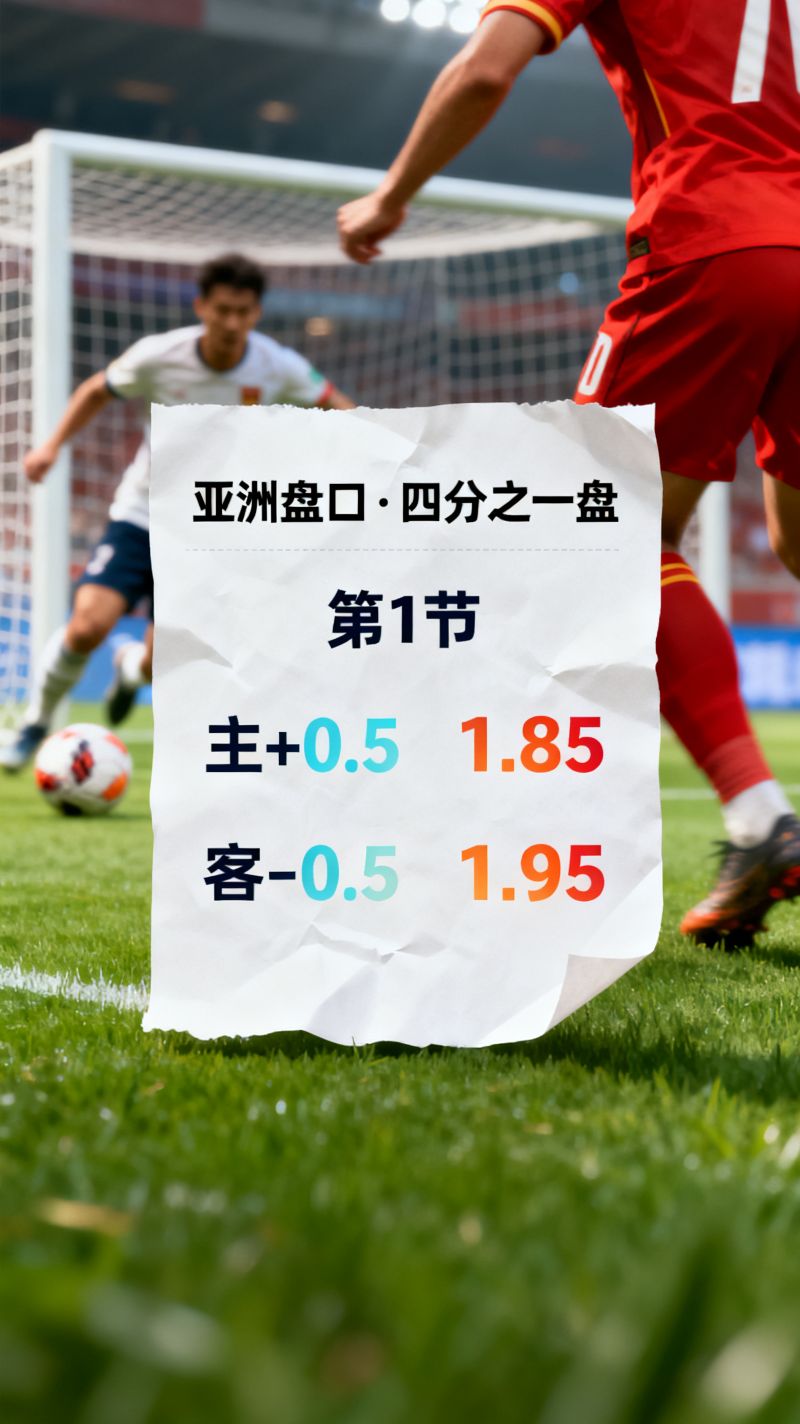
he injury-time board goes up: four minutes. The score is 1-0. A team that has been dominant all match suddenly looks nervous. On the Asian goal line market, the line has already moved from 2.5 to 2.25, then 2.0, then 1.75. If you bet the under at 2.5 before kickoff。you're now watching the last minutes with a peculiar kind of tension—every corner feels like a dagger. This is the reality of asian goal line markets: they are not static pre-match numbers but living, breathing probabilities that shift with every touch of the ball.Most casual bettors treat the Asian goal line as a cousin of the over/under. They see '2.5' and think it's just a simpler way to bet on total goals. That misses the point entirely. The quarter lines—2.25, 2.75。3.25—are where the real mechanics live. A 2.5 line means you win or lose. A 2.25 line splits your stake: half on 2.0, half on 2.5. So if the match ends with exactly two goals, you lose half and push half. That asymmetric risk profile is why sharp syndicates in Macau and Singapore spend hours mapping team tendencies against specific quarter lines. They aren't guessing;
they're calculating the probability of a push.Take the J-League as an example. A few seasons ago。I tracked a mid-table side that consistently generated scoring chances late in matches but rarely converted them. Against top-four opponents, the pre-match line would sit at 2.75—reflecting the stronger team's expected dominance. Yet the actual distribution of goals in those fixtures clustered around 2.0 to 2.5. Why?The weaker team parked the bus, absorbed pressure, and the favorite settled for narrow wins. The market, influenced by public money on the over, kept the line too high. Backing the under on the quarter line (2.75) returned a profit over a sample of 20 matches because half the time the game ended with 2 goals, yielding a half-win on the under. That's the edge: asian goal line markets often overprice the favorite's attacking potential.In-play, the dynamics get even more interesting. Asian operators—particularly those licensed in the Philippines and Isle of Man but catering to Asian clientele—price their live goal line markets with algorithms that react to shot frequency and possession. But they lag behind human intuition on one key variable: red cards. A red card usually pushes the line down by 0.5 to 0.75 goals. I've seen lines drop from 2.5 to 1.75 within 30 seconds of a sending-off, yet the subsequent 20 minutes often produce more goals than before—because the 10-man team abandons its defensive shape. That mispricing creates opportunities for traders who trust their eyes over the algorithm.What separates successful bettors in this market from the pack is not a secret formula but a willingness to track closing lines. If you can consistently beat the closing line by 0.25 goals on asian goal line markets, you're likely profitable long-term. Public bettors chase overs;sharp bettors fade them when the data supports it. The market isn't efficient—it's a tug-of-war between recreational money and informed money. Learn to read the quarter lines, understand the push probabilities, and never assume the goal line tells the whole story. The nuance is where the money hides.