he floodlights at the Veltins-Arena have witnessed few nights as electrically charged as when Schalke 04 hosted Inter Milan in the 2010/11 Champions League quarter-final. That 5-2 victory for the Royal Blues remains a benchmark for how a Bundesliga side can overwhelm Serie A opposition through sheer verticality. Raúl González。then 33, drifted between the lines with the cunning of a player who had spent a decade tormenting Italian defenses, and his early goal set a tone that Inter never recovered from. The scoreline flattered Schalke only in the sense that Inter’s defending was abject;the hosts’ pressing structure, orchestrated by Felix Magath, forced wave after wave of turnovers in midfield.Inter arrived in Gelsenkirchen as defending champions, yet the aura of that treble-winning side had faded. Leonardo’s midfield trio of Thiago Motta, Wesley Sneijder, and Dejan Stanković was overrun physically, and the back line—missing the suspended Lúcio—looked leaden against Schalke’s quick transitions. I recall watching Javier Zanetti, usually a model of composure。being dragged out of position by Jefferson Farfán’s direct running. That night, Schalke 04 vs Inter Milan was less a contest of reputations and more a lesson in intensity: the German side covered 118 kilometers collectively, nearly eight more than their opponents, and the gap showed in every second ball.The return leg at San Siro flipped the narrative. Inter, stung by the first-leg humiliation, pressed high and early, and Schalke’s 2-1 defeat felt like a formality given the aggregate cushion. Still。the tactical shift was telling. Leonardo abandoned the 4-3-1-2 that had been picked apart in Germany and switched to a 4-2-3-1 with Goran Pandev wide, which stretched Schalke’s narrow midfield. It worked for 45 minutes—Samuel Eto’o scored a trademark curler—but Schalke’s resilience, epitomized by Manuel Neuer’s second-half saves, denied any miracle. That tie, in microcosm, exposed Inter’s aging core and Schalke’s ceiling: a team capable of blitzkrieg football but unable to sustain it across two legs against elite European opposition.What lingers from Schalke 04 vs Inter Milan is the contrast in club trajectories. Schalke reached the semi-final that year, riding a wave of home-grown talent and Raúl’s twilight brilliance, but financial constraints soon dismantled the squad. Inter, meanwhile, began a slow decline from their 2010 peak, cycling through managers and tactical identities. The 5-2 result was not an anomaly—it was a snapshot of two clubs moving in opposite directions。
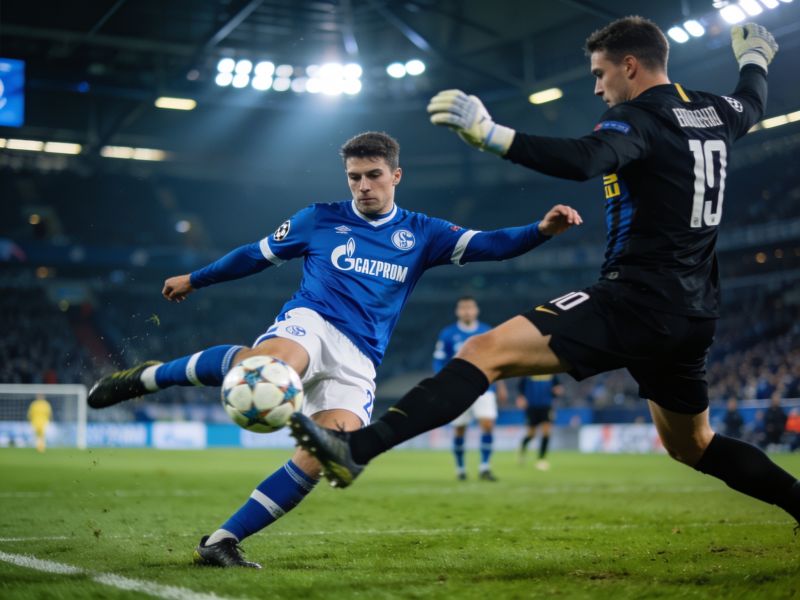
even if the aggregate scoreline obscured that truth. For neutrals, the match offered a rare spectacle: a German side out-Intering Inter, with relentless pressing and direct wing play replacing the patient buildup that had defined the Nerazzurri’s continental success.