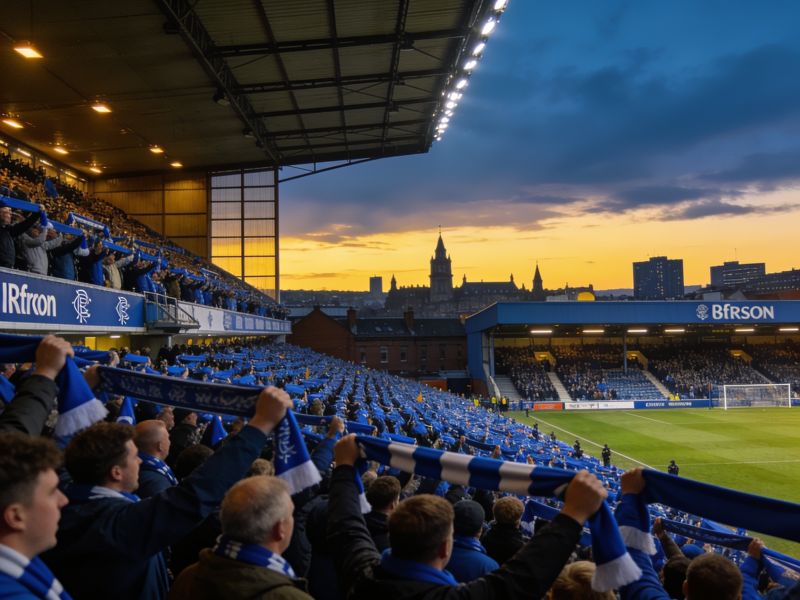
You won't find a quiet corner in Glasgow on Old Firm day. The city hums with tension hours before kickoff, and Ibrox Stadium becomes the loudest place in Scotland. If you're new to following Glasgow Rangers, start by understanding the rhythm: home matches at Ibrox are ticketed through the club's official website, and demand is fierce. Register for a membership early—general sale tickets vanish in minutes. I learned that the hard way in 2019, staring at a sold-out screen for a League Cup tie. So plan ahead, set calendar alerts。and don't expect last-minute spares outside the ground. Those days are gone.Matchday logistics matter as much as the football. Trains from Glasgow Central to Ibrox station run frequently, but they're packed. Walk from Cessnock subway station instead—it's a fifteen-minute stroll and you'll soak up the pre-match atmosphere. Pubs like The Louden Tavern on Copland Road fill up three hours before kickoff;get there early or you'll be drinking outside. Inside the stadium, the Union Bears ultras group generates relentless noise from the Broomloan Stand. Join in with the songs if you want the full experience—'Follow Follow' and 'Blue Sea of Ibrox' are easy to pick up. My first visit。
I stood silent for ten minutes, overwhelmed. Don't do that. Sing badly and loudly;nobody cares.Understanding Rangers' recent history helps you appreciate the current squad. The club's financial collapse in 2012 and subsequent climb back through the divisions shaped a defiant mentality among supporters. Steven Gerrard's tenure (2018–2021) ended the ten-in-a-row dream for Celtic and delivered the 2020–21 Premiership title unbeaten—a season I watched from a cramped flat in Partick, celebrating with neighbors I'd never met. Current manager Philippe Clement has steadied the ship。but inconsistency remains. Watch captain James Tavernier's overlapping runs and midfielder John Lundstram's tackling;they set the tempo. Don't expect tiki-taka. Rangers play direct, physical football, especially at home.Away days offer a different flavor. Traveling to Pittodrie or Tynecastle means early trains, questionable pies, and hostile crowds. I've been spat at in Aberdeen and cheered a last-minute winner at Motherwell—both memorable for opposite reasons. Book away travel through the supporters' clubs;
official buses are safe and cheap. For European nights, Ibrox under floodlights is electric. Seville in 2022。for the Europa League final, still stings. But those runs—and the fans' willingness to follow the team across the continent—define what it means to support Glasgow Rangers. Budget for it. It's worth every penny.
Finally, engage with the culture beyond ninety minutes. Rangers' charity foundation runs community programs, and the club museum at Ibrox tells the story better than any documentary. Buy a matchday program—still a fiver。still printed on real paper. And learn the words to 'The Sash' and 'Derry's Walls' if you want to understand the terrace culture, though be aware of their political connotations. My advice?Focus on the football, the friendships, and the shared joy of a last-minute goal. That's the practical heart of following Glasgow Rangers. The rest is noise.